1(213)276-6416|国际医疗协调服务 · 北京
English登录免费注册 →
OrientHealthLink
OrientHealth国际医疗服务
首页健康体检手术与治疗慢性病调理疾病治疗合作医院套餐价格博客联系我们
免费开始 →费用计算器 · 患者故事 · 无需绑卡

获取免费医疗旅游指南

下载完整指南 + 每周获取专家建议

OrientHealthLink

总部位于北京 · 国际医疗协调服务

"透明定价——无隐藏费用。详见定价页面。"

快速链接

服务流程合作医院慢性病调理安全保障套餐价格会员博客联系我们合作推广成为地接

联系方式

info@orienthealthlink.com1(213)276-6416WhatsApp 咨询

北京市昌平区北七家未来科学城(北京协调团队)

医疗免责声明:OrientHealthLink 是医疗旅行协调服务提供商,不是医疗机构。本网站内容仅供一般信息参考,不构成医疗建议、诊断或治疗方案。我们不提供任何形式的医疗诊断、治疗建议或健康评估服务。所有医疗决策应由您与具有执业资格的医师共同做出。本网站提及的中医疗法效果因人而异,相关描述基于传统中医理论,不代表对特定疗效的保证。跨境医疗涉及复杂的法律和健康风险,建议您在做出决定前咨询专业法律和医疗顾问。

© 2024–2026 OrientHealthLink. All rights reserved.

服务条款隐私政策
返回博客
Trust2026-07-1014 分钟阅读

丹佛ICU护士在美式药物12年后飞北京治慢性偏头痛:真实经历全记录

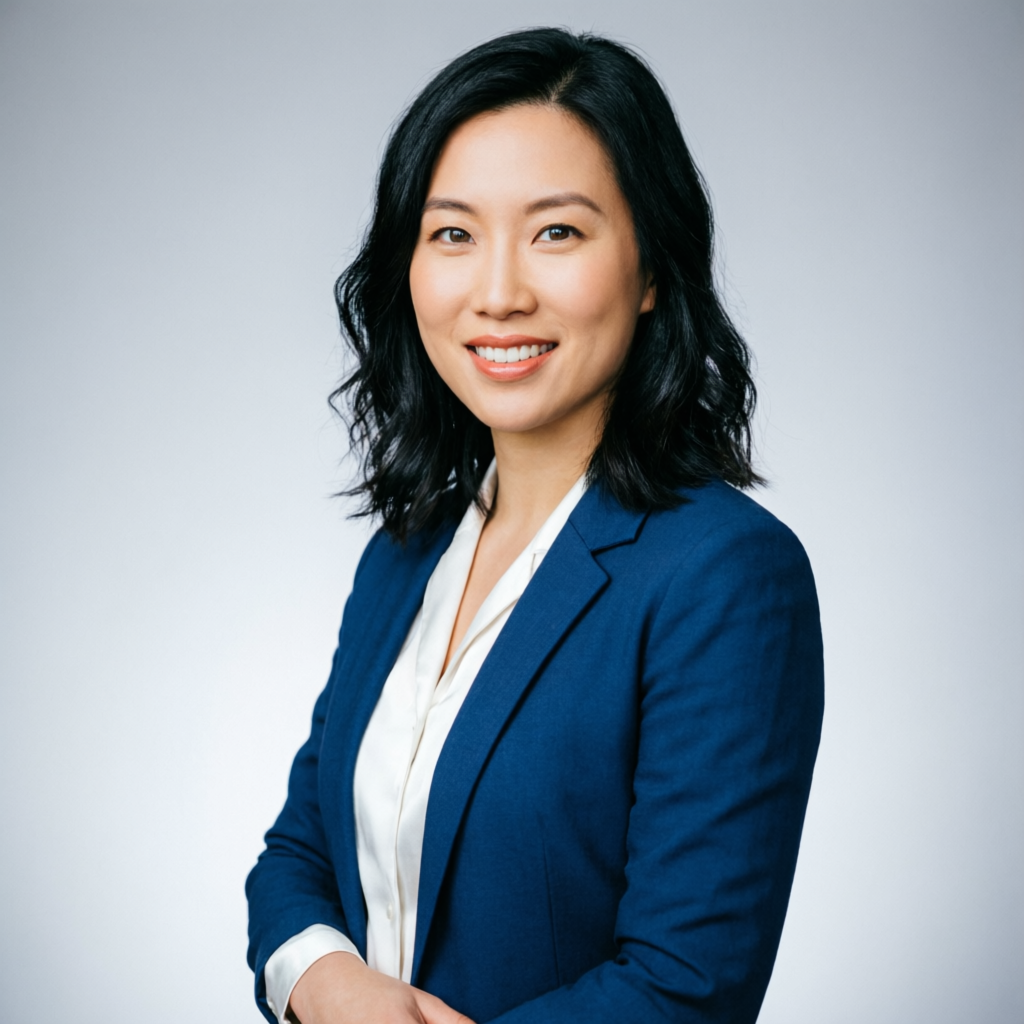
林思瑶

林思瑶

高级医疗旅行协调员

8年在北京和上海协调国际患者医疗服务经验。

A Denver ICU Nurse Flew to Beijing for Chronic Migraine After 12 Years of American Pills — Here's What Actually Happened

Amanda R. is 41, a critical care nurse in Denver, married with two teenagers. For twelve years she has lived with chronic migraine — the kind that neurology calls "chronic" once you cross fifteen headache days a month for three months in a row. She had done the American playbook end to end: two neurologists, one headache specialist, three MRIs, propranolol, topiramate, amitriptyline, sumatriptan, rizatriptan, Botox injections every twelve weeks, and finally a CGRP monoclonal antibody that cost her insurance $2,300 a month and left her still logging eleven bad days out of thirty.

In April 2026 she flew to Beijing. Six weeks later she flew home. This is the honest account of what happened in between — including the parts that were harder than she expected, the parts that were quietly extraordinary, and the parts she still cannot fully explain.

Amanda asked us to publish her story anonymously except for her first name and profession. Every clinical detail below has been checked against her discharge summary and her follow-up notes from her US neurologist. Her migraine diary from Denver, Beijing, and the four months since is the source for the frequency numbers.

Why she stopped believing the American plan would ever work

Amanda is a nurse. She is not anti-medicine. She had followed every protocol her US team gave her. What she could not accept anymore was the ceiling. Her headache specialist had told her, in almost these exact words, that she was already on the strongest preventive stack available and that "some patients just plateau at partial response." The suggestion was to stay on the CGRP indefinitely and accept eleven bad days a month as the new baseline.

Amanda did the math one Saturday morning. Eleven bad days a month is 132 days a year. Over the next twenty working years, at her current trajectory, she would be non-functional for roughly 2,640 days. Seven full years of her remaining career, spent in a dark bedroom. She wrote that number on a Post-it and stuck it to her fridge.

The idea of trying Traditional Chinese Medicine came from a colleague in her ICU, an anesthesiologist who had done a rotation at Beijing's Guang'anmen Hospital during his fellowship. He was blunt with her: he did not know if it would work, but he had watched Chinese neurology and TCM co-manage migraine patients in ways that no American clinic he'd ever worked in came close to. He said the one thing that stuck with her: "You have nothing left to lose in the US system. In Beijing you at least get a different lens."

Getting from a fridge Post-it to a plane ticket

Amanda did four things before booking anything. She recorded them in her Notes app and shared the screenshots with us:

  1. She ordered her complete US medical records — every MRI, every medication trial, every neurology note — through her hospital's patient portal.
  2. She emailed three coordinators. Two got back to her with generic PDFs. OrientHealthLink got back to her the same day with a real question: had her US team ever ruled out medication-overuse headache? (They had. She had documentation.)
  3. She asked for a specific hospital pairing — a Western neurology consult plus a TCM department that actually treated migraine at volume, not a spa version of acupuncture. She was routed to a combined workup at a top Beijing tertiary hospital with an in-house TCM department.
  4. She got a written itemized quote before she paid anything. Consults, imaging (they wanted a fresh MRI on their equipment), acupuncture series, herbal decoction, tuina bodywork, one round of trigger-point injections, and a follow-up plan. Total quote, all-in, was $4,180 USD. Her last three months of CGRP copays alone had cost more than that.

If you want to see how that kind of quote is built and what "all-in" actually covers, we broke it down separately in our piece on how to pay a Chinese hospital safely, including deposits and refunds. She followed that exact path — 30% deposit before arrival, balance on discharge, itemized receipts for insurance.

Or, before you commit to anything, you can estimate your own costs here in about ninety seconds.

Week one: the hardest week

Amanda expected the flight to trigger a bad episode. It did. She landed at Beijing Capital jet-lagged, mildly dehydrated, and by the second morning she was in a level-8 migraine in her hotel room with the curtains taped shut. She almost called her husband to say she had made a mistake.

Instead she called the coordinator line. Someone was at her hotel within ninety minutes with a Chinese-speaking driver and got her into the hospital's international patient center that afternoon — not to start treatment, but for an acute rescue: IV hydration, an anti-emetic, a low-dose sumatriptan she already had in her bag, and a dark quiet room for four hours. No charge for the rescue visit beyond the medications, which came to roughly $38.

That was the moment, she told us later, that she stopped being scared. Not because the migraine broke — it took another sixteen hours — but because the response was faster than any American ER she had ever worked in or been a patient in.

The formal workup started on day four. New MRI (clean, matching her US scans). Bloodwork including markers her US team had never run. A ninety-minute intake with the neurology attending, who read her records in English, then a separate ninety-minute intake with the TCM attending, who examined her tongue, took six pulse readings on each wrist, and asked her about her sleep, her digestion, her cold hands, and her menstrual cycle in a level of detail that took her by surprise.

The diagnosis on the Western side was consistent with what she already knew: chronic migraine with medication-overuse features and a probable central sensitization component. The TCM diagnosis used a different vocabulary — Liver Qi stagnation with underlying Kidney deficiency and Blood stasis — and Amanda, being a nurse, asked the attending directly whether he could translate that into something falsifiable. He answered, in careful English, that the pattern predicted three things: her migraines would be worse in the week before her period, worse after emotional stress, and worse if she skipped meals. All three were true. She had never told him that.

The protocol, in plain English

Six weeks of combined care. Five days a week for the first two weeks, then three days a week.

The Western side stayed conservative: they did not add new preventives. They tapered her off the amitriptyline she had been on for six years (which they suspected was contributing to her morning fog) and kept her CGRP going.

The TCM side did the heavy lifting. Acupuncture three to five times a week, targeting points around the temples, the base of the skull, and the hands and feet. A custom herbal decoction, tasting exactly as bitter as internet stereotypes suggest, adjusted every seven to ten days based on her pulse and symptoms. Weekly tuina — a deep, sometimes uncomfortable bodywork session focused on her neck, shoulders, and upper back, which her US massage therapists had always described as "the worst neck I've ever worked on." One round of trigger-point injections into the occipital region.

Nothing about the protocol was mystical. Every session was documented in a chart. Every herbal formula came with an ingredient list she could photograph and later show her US pharmacist (who checked interactions and found none of concern with her existing meds).

What her migraine diary shows

Amanda kept the same diary format she had used for four years in the US: a 0–10 pain score morning and evening, plus rescue medication use.

PeriodBad days / 30Average peak painRescue triptans / month
Denver, 6 months before trip11.37.48.2
Beijing, weeks 1–297.04
Beijing, weeks 3–455.52
Beijing, weeks 5–634.81
Denver, month 1 post-return45.02
Denver, month 4 post-return34.51

She has gone from 11 bad days to 3 bad days per month. She has not stopped her CGRP — her Beijing team explicitly told her not to. But she has stopped needing rescue triptans on most weeks for the first time in a decade.

What her US neurologist said when she got home

Amanda flew home with her Beijing discharge summary, her herbal formula list, her acupuncture log, and her updated MRI. Her US neurologist read all of it. His words, verbatim from her phone note: "I don't know exactly which part of this worked. I'm not going to pretend I do. But your numbers are real, your MRI is clean, and whatever they did, keep doing it."

He renewed her CGRP prescription. He signed off on her continuing a modified oral herbal regimen shipped from Beijing every eight weeks (roughly $95 per shipment). He asked for her migraine diary at her three-month follow-up. That is where the "month 4" row in the table above comes from.

The parts she wants Americans considering this to know

Amanda asked us to include the honest downsides:

"The herbs taste awful. Nobody warns you enough. Also, acupuncture five days a week is exhausting even if it's working — you don't feel triumphant, you feel like you've been through something. And week one was scary. If OrientHealthLink hadn't picked up when I called, I don't know what I would have done."

She also wants Americans to hear the part her US colleagues underestimate: the Chinese neurologist was not anti-Western medicine, and the Western neurologist was not anti-TCM. They ran a combined chart. They talked to each other. That single fact — two systems collaborating on one patient — is the thing she says the American system does not offer at any price point.

Total cost, itemized

ItemUSD
Neurology consults (3)$310
TCM consults + pulse/tongue diagnostics (5)$220
MRI brain (fresh scan)$260
Bloodwork panel$95
Acupuncture (24 sessions)$1,140
Herbal decoction (6 weeks)$540
Tuina bodywork (6 sessions)$390
Occipital trigger-point injections$180
Acute rescue visit (week 1)$38
International patient coordination$580
Discharge summary + records translation$180
Ongoing herb shipments (4 months so far)$380
Total, 4-month cumulative$4,313

For reference: Amanda's out-of-pocket for her CGRP and Botox alone in the twelve months before the trip was $8,940 after insurance. Not counting the visits, the copays, the missed workdays, or the Post-it math.

What she would do differently

Three things. She would fly in three days earlier to acclimate before the workup started, so week one was not so brutal. She would bring twice as much of her own preferred anti-nausea medication, because she never wanted to depend on the hotel pharmacy again. And she would ask, before booking, whether the TCM department she was matched with treated migraine at volume — hers did, more than 400 patients a year, but that is a question worth asking upfront. If you are researching your own match, our guide on how to choose the right hospital in China covers the volume question in more detail.

Where she is now

Three bad days a month. One rescue triptan most weeks. Working full ICU shifts. Back to running four days a week. She has scheduled a two-week booster trip to Beijing next spring — not because her results have slipped, but because her Beijing team recommended a short reinforcement course at the six-month mark. Total budget for the booster, including flights: under $3,200.

She has one more line in her notes, which she gave us permission to publish:

"I stopped counting the days I would lose. I started counting the days I got back."

Want to know how much YOUR case would cost?

Get a free, itemized estimate for your specific condition — chronic pain, migraine, surgery, or a full health checkup — with the same hospital pairing model Amanda used.

Get My Free Estimate → Try the Cost Calculator

Or WhatsApp us directly: +86 138 0000 0000 — usually reply within a few hours.

chronic migraine tcm chinatraditional chinese medicine migraine treatmentmedical tourism china chronic painacupuncture migraine beijingmedical tourism china reviews 2026
分享:

关注医疗旅行最新资讯

获取免费指南 + 每周医疗旅游专家洞察,直达您的邮箱。

相关服务

准备好迈出下一步了吗?

从初次咨询到术后随访,我们为您的中国医疗之旅处理每一个细节。

了解我们的服务

准备好探索中国的医疗服务了吗?

联系我们获取免费咨询,我们的专业团队将为您量身定制医疗旅行方案。

免费咨询
返回博客