1(213)276-6416|国际医疗协调服务 · 北京
English登录免费注册 →
OrientHealthLink
OrientHealth国际医疗服务
首页手术与治疗健康体检慢性病调理疾病治疗合作医院你的旅程套餐价格博客联系我们
免费开始 →费用计算器 · 患者故事 · 无需绑卡

获取免费医疗旅游指南

下载完整指南 + 每周获取专家建议

OrientHealthLink

总部位于北京 · 国际医疗协调服务

"透明定价——无隐藏费用。详见定价页面。"

快速链接

服务流程合作医院慢性病调理安全保障套餐价格会员博客联系我们合作推广成为地接

联系方式

info@orienthealthlink.com1(213)276-6416WhatsApp 咨询

北京市昌平区北七家未来科学城(北京协调团队)

医疗免责声明:OrientHealthLink 是医疗旅行协调服务提供商,不是医疗机构。本网站内容仅供一般信息参考,不构成医疗建议、诊断或治疗方案。我们不提供任何形式的医疗诊断、治疗建议或健康评估服务。所有医疗决策应由您与具有执业资格的医师共同做出。本网站提及的中医疗法效果因人而异,相关描述基于传统中医理论,不代表对特定疗效的保证。跨境医疗涉及复杂的法律和健康风险,建议您在做出决定前咨询专业法律和医疗顾问。

© 2024–2026 OrientHealthLink. All rights reserved.

服务条款隐私政策
返回博客
Trust2026-07-0511 分钟阅读

休斯顿妈妈飞上海做子宫切除手术:真实经历全记录

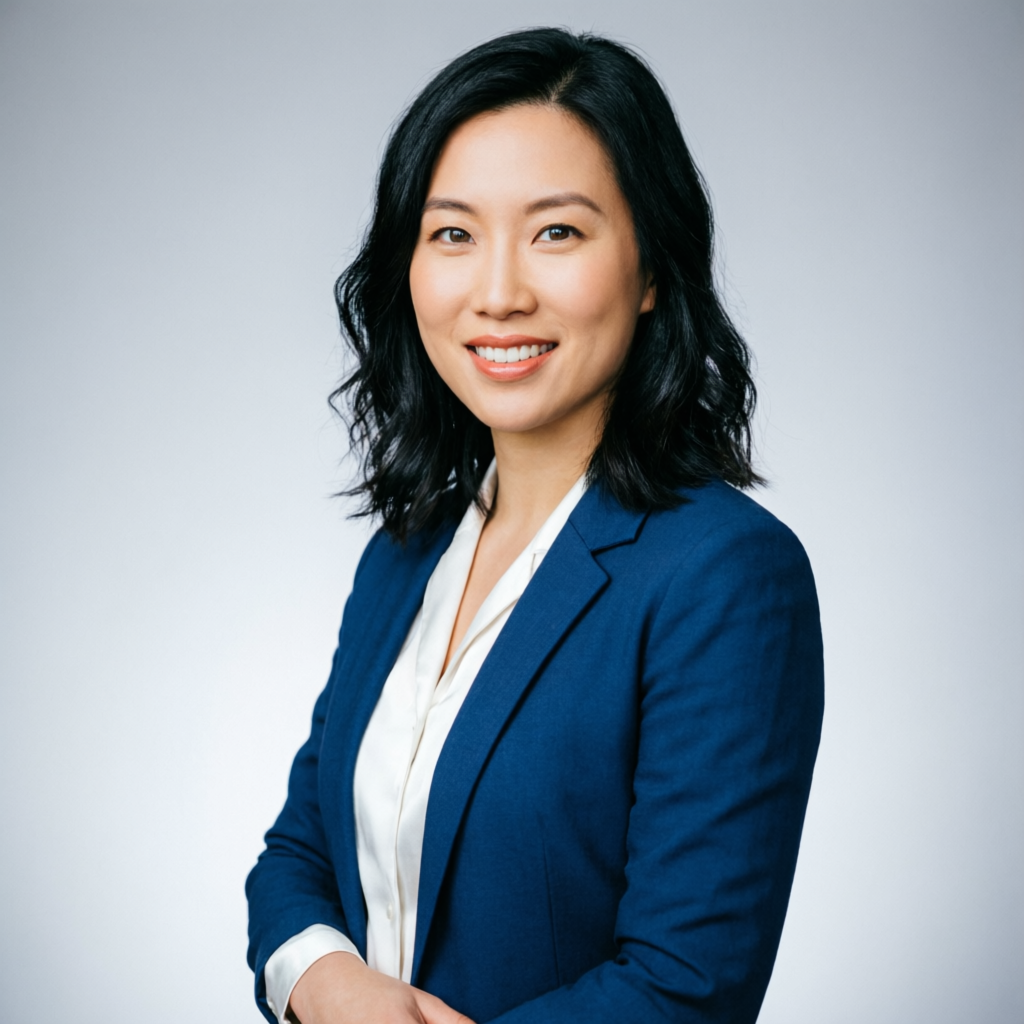
林思瑶

林思瑶

高级医疗旅行协调员

8年在北京和上海协调国际患者医疗服务经验。

A Houston Mom Flew to Shanghai for a Hysterectomy — Here's What Actually Happened

Her name isn't Laura, but that's what we'll call her. She's 47, lives outside Houston, and has two teenagers. For three years she'd been dealing with severe fibroids — the kind that made her cancel plans, wear dark clothes, and quietly count how many pads she needed to get through a work meeting. Her US gynecologist recommended a hysterectomy. Her insurance said yes, kind of. After deductible, co-insurance, and the fact that her preferred surgeon was out-of-network, she was looking at $14,800 out of pocket for the procedure alone.

Then a friend from her women's group mentioned that a coworker's sister had flown to Shanghai for surgery two years earlier. Laura laughed. Then she looked it up. Six weeks later she was on a Cathay Pacific flight with her husband, a folder of medical records, and the kind of nervous energy that comes from doing something your American friends think is a little crazy.

This is what actually happened — the parts that were easier than she expected, and the parts that weren't. We share it with her permission, with identifying details changed. If her situation sounds like yours, you can estimate the numbers for your own case here before doing anything else.

The math that pushed her to look overseas

Laura had a high-deductible plan. Her share of the hysterectomy — a laparoscopic supracervical procedure with the surgeon she trusted — would have been about $14,800 after her deductible and co-insurance. That number didn't include the two weeks off work at partial pay, or the $1,800 she'd already spent on failed hormonal treatments and iron infusions.

The quote she received from Ruijin Hospital's international patient department in Shanghai, through OrientHealthLink, was $6,400 for the surgery, four nights inpatient, all imaging, labs, anesthesia, discharge medications, and one follow-up visit. Add flights, hotel, meals, and an interpreter, and her all-in was around $9,200. She'd save roughly $5,600, but that wasn't the number she cared about most. The number she cared about was this: she could have the surgeon she wanted, in a room where someone spoke English, without spending 11 months on a waitlist or fighting her insurance every step.

Week 1: The pre-trip work

The first thing that surprised Laura was how much happened before she got on a plane. She had a remote video consultation with the Shanghai gynecologic surgeon two weeks before departure. It ran 42 minutes. The surgeon reviewed her ultrasound, MRI, and blood work, asked about her prior C-section, and confirmed that a laparoscopic approach would work for her specific fibroid pattern. The surgeon spoke fluent English and had trained for two years at a hospital in Boston. Laura told me later, "It felt more thorough than any consult I'd had in Houston."

She was given a checklist: exact medications to stop and when, what to eat and not eat the week before, what documents to bring, and — this was new to her — a WeChat contact for a coordinator named Jenny who would meet her at Pudong airport. The visa process (an M-visa) took nine days.

If you want to see what a full pre-trip prep looks like end-to-end, read our medical trip preparation checklist. Laura followed it almost exactly.

The arrival: 72 hours in Shanghai before surgery

Laura and her husband landed at Pudong at 6:15 a.m. Jenny was waiting past customs holding a small sign. A car took them to a service apartment about eight minutes from Ruijin Hospital in Huangpu district. The apartment had a small kitchen, a queen bed, and a view of a park where old men were doing tai chi.

Day one was rest. Day two was the pre-op workup at the hospital: repeat blood tests, ECG, chest X-ray, anesthesia consult. Every appointment was scheduled. Every clinician who saw her spoke to her in English or through Jenny. The whole day took just under five hours, including a lunch break at the hospital café where she ate soup dumplings and, for the first time in months, wasn't in pain from the fibroids. Day three she met the surgeon in person for a final review and signed consent forms in English.

What surprised Laura most in those first three days was the ordinariness of it. She had been expecting either chaos or coldness. She got neither. She got a large hospital that ran on time, in a city that looked like a cleaner, greener version of Manhattan.

Surgery day

Surgery was at 8:00 a.m. Laura was in the OR by 8:20. The procedure took just under two hours. She woke up in a recovery area with Jenny sitting nearby and her husband coming in ten minutes later. The pain was manageable. The nurses spoke functional English and used a translation app for anything complicated. She was moved to a private room by mid-afternoon.

The private room cost an extra $80 per night above the standard package — a decision she made in advance and doesn't regret. It had a pull-out couch for her husband, a bathroom, a small refrigerator, and a window overlooking the hospital garden.

Recovery: four nights in the hospital, then a week in Shanghai

Ruijin kept Laura for four nights, which is longer than she likely would have been kept in a US hospital for the same procedure. She initially thought this was a downside. By day two she thought it was a gift. Nurses checked on her every few hours. A physiotherapist got her walking gently on the ward the morning after surgery. Meals were adapted to a post-abdominal-surgery diet — mostly congee, steamed fish, and soft vegetables, plus a familiar option like scrambled eggs for breakfast.

She was discharged on day five with a folder of documents in English and Chinese, prescriptions filled at the hospital pharmacy, and a plan for two follow-up visits over the next 10 days. The follow-ups took less than an hour each. In between, she and her husband did light sightseeing — a slow walk along the Bund, one afternoon at a museum, one long taxi ride to a shopping district she'd read about.

What didn't go perfectly

This is where most patient stories get sanitized. Two things didn't go perfectly for Laura.

First, her pain on day two was worse than expected. The pain protocol at Ruijin uses a slightly lower baseline dose of opioids than what she was accustomed to in the US. Once Jenny relayed her concern, the anesthesia team adjusted the medication within the hour. But there was about a six-hour gap where she was uncomfortable and unsure who to ask.

Second, one of her lab results on the third day was unexpectedly abnormal. It turned out to be nothing — a mild inflammatory marker that resolved on its own — but for a few hours she was worried and jet-lagged and far from home. The surgeon came in the next morning, explained the finding, and repeated the test to confirm.

Both problems got solved. Neither was a disaster. But they matter, because a real patient story includes the parts that made you uneasy, not just the parts that made you post on Instagram.

Coming home

Laura flew home 14 days after surgery, business-class one-way (booked on points), because sitting upright for 14 hours in economy after abdominal surgery is not a game plan. She had a discharge summary, a medication list, and Jenny's WeChat, which she still uses occasionally when she has a question. Her US primary-care doctor accepted the records and did her final follow-up eight weeks later. She's back at work, back to running two miles a few times a week, and — for the first time in three years — not thinking about her uterus.

The financial recap

ItemAmount (USD)
Surgery and 4-night hospital stay at Ruijin$6,400
Private room upgrade (4 nights)$320
Flights (economy in, business home on points)$1,650
Service apartment (11 nights)$880
Meals and local transport$520
Visa fees (Laura + husband)$280
Coordinator + interpreter services$0 (bundled)
Contingency spent (extra medication, one souvenir)$180
Total$10,230

US comparison: $14,800 surgery share alone, plus two weeks of partial-pay leave (~$2,100 lost), for an equivalent $16,900 out of pocket at home, minus the sightseeing.

What she'd tell you if you're on the fence

I asked Laura what she would tell another American woman thinking about doing this. She said three things.

First, do it through an organization that has done it before. She said the pre-trip logistics were the scariest part, and having Jenny meet her at the airport made the whole trip feel one degree simpler. "I'm not brave enough to have done this on my own," she said. "I'm brave enough to have done this with help."

Second, bring your husband, your sister, your best friend — anyone. The recovery is fine but the loneliness after surgery in a foreign country is real. Her husband being there mattered more than the food, the coordinator, or the price.

Third, don't do it if you're only chasing the savings. "If the surgery in America cost the same as in Shanghai, I still would have gone to Shanghai," she said. "The waitlist would have been eight months. The office visits would have felt rushed. Here I felt like a person, not a claim number."

Is your case similar?

Every patient's situation is different, and this is one story, not a promise. But if you're staring at a US surgery bill that feels punitive, and you've quietly wondered whether the "medical tourism to China" thing is real, it is real. What we do at OrientHealthLink is bridge the gap: match you to the right hospital, get a coordinator like Jenny at the airport, translate everything, and stay with you through the follow-ups after you're back home.

If you want to see what the numbers might look like for your specific procedure, use our calculator here. If you want a human to look at your case, book a free assessment and we'll come back within 48 hours. For more real stories, browse our 2026 reviews page where patients from all over the US share what worked and what surprised them.

Laura's takeaway, in her words: "I saved a lot of money, but the bigger thing was I got the surgery I actually needed, from someone I trusted, in the timeline that fit my life. That is the part American healthcare had stopped giving me."

Note: this story reflects one patient's experience. It is not medical advice, and outcomes vary by individual case. Any decision to seek care abroad should be made with your own physician.

Want to know how much YOUR case would cost?

A real quote from a JCI-accredited hospital in China, in plain English, with a human coordinator from day one. No obligation, no upselling.

Get My Free Estimate → Try the Cost Calculator

Or WhatsApp us directly: +86 188 1155 1608

hysterectomy china patient storyshanghai surgery american patientruijin hospital fibroidsmedical tourism china reviews 2026gynecology surgery shanghai
分享:

关注医疗旅行最新资讯

获取免费指南 + 每周医疗旅游专家洞察,直达您的邮箱。

相关服务

准备好迈出下一步了吗?

从初次咨询到术后随访,我们为您的中国医疗之旅处理每一个细节。

了解我们的服务

现在你已经了解了费用信息...

查看你的具体节省金额

使用免费计算器——选择你的手术类型,30 秒看到你能省多少。无需邮箱。

计算我的节省金额

还没准备好计算?

保存完整指南稍后阅读

24 页完整指南:费用、医院、真实患者故事——发送到你的邮箱。

相关阅读

Decision
如何对比中国医院报价:给美国患者的实用框架
三家中国医院的报价看起来完全不同?这是一份对比框架,让你能够苹果对苹果地评估,并自信做出决定。
阅读全文 →
Treatment
中国质子治疗:国际癌症患者的精准放疗新选择
中国目前运营十余家质子治疗中心,使用顶级设备,费用比美国低60-80%,并提供完善的国际患者服务。
阅读全文 →
Treatment
中国减重手术:胃旁路与袖状胃切除术完整指南
中国顶尖减重中心每年完成超过5万例减重手术,效果优异,费用比美国、英国和澳大利亚低50-70%。
阅读全文 →
Treatment
中国神经外科手术:脑瘤与脊柱手术国际患者指南
中国知名神经外科医院每年完成超过30万例手术,治疗效果达到世界一流水平,费用远低于欧美国家。
阅读全文 →
返回博客