1(213)276-6416|International Medical Coordination · Beijing
中文Sign InStart Free →
OrientHealthLink
OrientHealthInternational Care
HomeSurgery & TreatmentHealth ScreeningChronic ConditionsDisease TreatmentOur HospitalsYour JourneyPricingBlogContact
Start Free →Cost calculator · Patient stories · No card

Get Your Free Medical Tourism Guide

Download our comprehensive guide + receive expert tips weekly

OrientHealthLink

Based in Beijing — International Medical Coordination

"Transparent pricing — no hidden fees."

Quick Links

How It WorksOur HospitalsChronic ConditionsSafetyPricingMembershipBlogContactPartner with Us

Contact

info@orienthealthlink.com1(213)276-6416Chat on WhatsApp

Future Science City, Beiqijia, Changping District, Beijing (Coordination Team)

Medical Disclaimer: OrientHealthLink is a medical travel coordination service provider, not a healthcare institution. The content on this website is for general informational purposes only and does not constitute medical advice, diagnosis, or treatment recommendations. We do not provide medical diagnosis, treatment advice, or health assessments of any kind. All medical decisions should be made in consultation with qualified, licensed physicians. TCM therapies mentioned on this site may vary in effectiveness by individual; descriptions are based on traditional TCM theory and do not guarantee specific outcomes. Cross-border medical travel involves complex legal and health considerations — we recommend consulting professional legal and medical advisors before making decisions.

© 2024–2026 OrientHealthLink. All rights reserved.

Terms & ConditionsPrivacy Policy
Back to Blog
Trust2026-07-0413 min read

Insurance Denied Her Bariatric Surgery in Ohio — She Flew to Shanghai, Lost 87 Pounds, and Paid Less Than Her Deductible

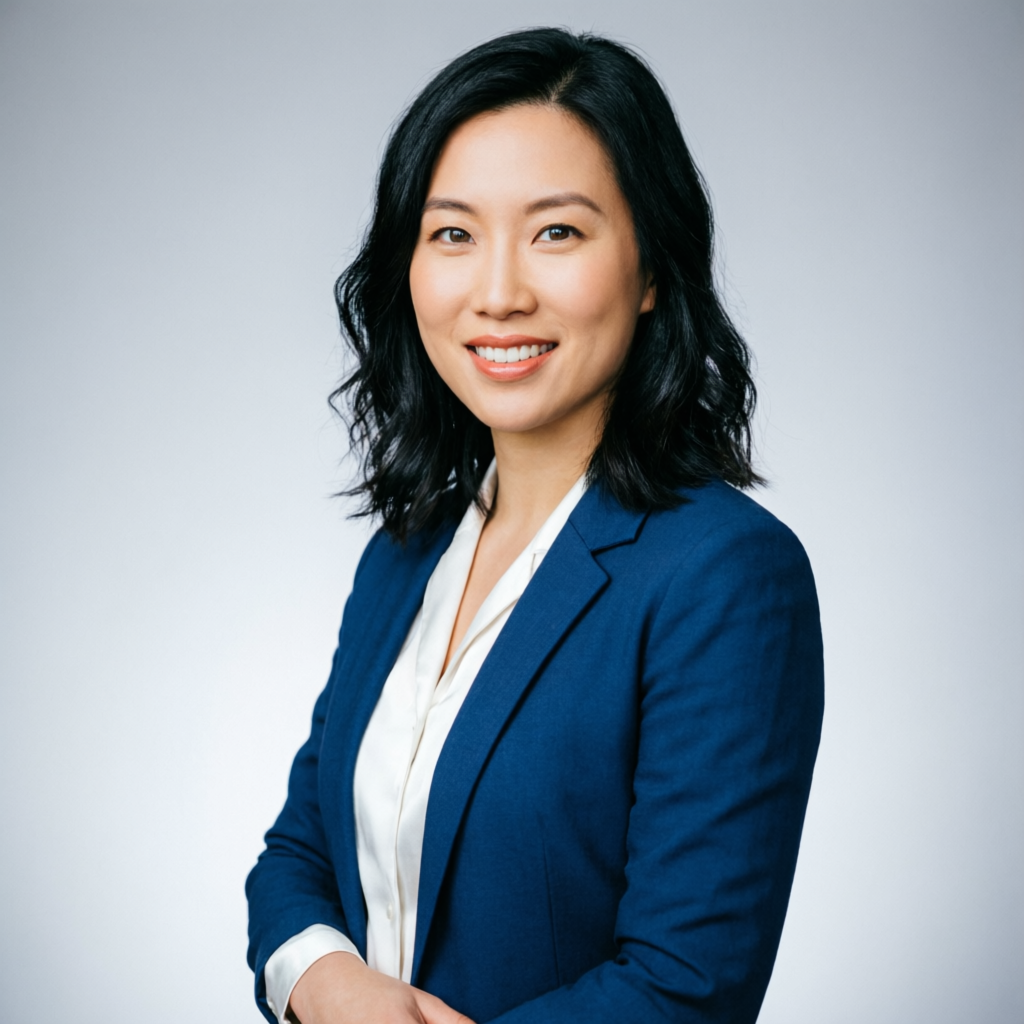
Sarah Lin

Sarah Lin

Senior Medical Travel Coordinator

8 years coordinating international patient care in Beijing and Shanghai.

Insurance Denied Her Bariatric Surgery in Ohio — She Flew to Shanghai, Lost 87 Pounds, and Paid Less Than Her Deductible

Rachel is 42 years old. She works as a school administrator in a small city in southeastern Ohio. Two summers ago, at 5'5" and 267 pounds, her doctor sat her down and said, quietly, that she was not going to see her son graduate from college if something did not change soon.

She had already tried what she called "every diet ever invented." She had lost 40 pounds twice and gained it all back plus more, both times. Her doctor recommended a sleeve gastrectomy — a bariatric procedure that removes about 75% of the stomach and has excellent long-term results in patients like her.

Her insurance denied the surgery. Twice.

Eleven months later, Rachel had the surgery — but not in Ohio. She had it in Shanghai. This is her story, told in her own words as best as we could preserve them, with her permission. Names of her employer, insurer, and specific hospitals are changed for privacy.

"I Wasn't Sick Enough"

Rachel's BMI was 44.4. Her fasting blood sugar was creeping into prediabetic range. She had sleep apnea. Her knees hurt when she walked up a single flight of stairs. She had recently been prescribed blood pressure medication.

By any medical standard, she qualified for bariatric surgery. The problem was her insurance's specific documentation requirements: she needed six consecutive months of physician-supervised weight-loss attempts, documented in the exact way the insurer wanted, and she needed the diet program to be "medically appropriate" as judged by an internal reviewer she never spoke to.

"I did the six months," she said. "I did an eight-month program. They said my documentation was missing a nutritionist visit in month four. So I did another six-month program. They said my last three months of records were 'not sufficiently detailed.' It was like they were designing an obstacle course to make sure I gave up."

The cash price at the closest US hospital was $27,400 for the surgery itself, not counting the pre-op program, the anesthesia (billed separately), or the two-night hospital stay ($4,800 additional). Her deductible was $6,500 and her out-of-pocket max was $9,200, but only if the insurer approved the surgery.

They didn't. So she started looking abroad.

Why She Chose China (Not Mexico or Turkey)

Rachel first looked at Mexico — Tijuana specifically, which handles a lot of American bariatric patients. Then she looked at Turkey. She spent two months reading forums and watching YouTube videos. Two things pushed her toward China instead.

"The hospital I ended up choosing does 900+ bariatric procedures a year at the international department alone," she said. "The Mexico clinic I was looking at was doing maybe 300. And the Chinese hospital had actual academic surgeons — people with names on published papers I could look up. The Mexico clinic had a lot of glossy marketing and not a lot of publications."

The second reason was safety data. Bariatric surgery has a well-known complication profile. She wanted a large, high-volume, university-affiliated center — the kind of place that has anesthesiologists, ICU nurses, and endoscopy teams on standby. That is what she found in Shanghai.

She reached out to a coordination service after finding one of our patient stories on a Facebook group. Her first video call with a Shanghai bariatric surgeon happened 11 days later. The surgeon spoke fluent, careful English, spent 40 minutes with her, and asked for a specific list of labs and imaging that she recognized from her US workup — meaning he actually read her records instead of just quoting a package price. If you want to see what a case like this would look like for you, you can estimate your treatment costs here.

The Real Cost Breakdown

Rachel kept a spreadsheet. Here is what she actually paid, in US dollars, all-in:

ItemCost
Pre-op consultations and lab work in China$780
Sleeve gastrectomy surgery (all-inclusive)$7,900
3-night hospital stay (private room)Included
Post-op follow-up visits in Shanghai (3 visits)Included
Round-trip flight from Columbus to Shanghai$1,340
Hotel for 17 nights (near hospital)$1,530
Meals, transportation, incidentals$620
Coordination and translation service$1,600
Chinese medical visa$185
Travel insurance (medical + trip)$210
Total$14,165

The US quote for the surgery alone — with everything separately billed — was estimated at just under $40,000. Her savings were about $25,000, and she got the surgery eleven months earlier than she would have if she had kept fighting her insurer.

Week by Week: What Actually Happened

Days 1–2: Arrival

Rachel landed at Shanghai Pudong on a Sunday afternoon. A coordinator met her at arrivals — a Chinese woman in her 30s named Amy who spoke excellent English and had already texted Rachel a photo of what she would be wearing. Amy drove her to a Marriott near the hospital, helped her get a Chinese SIM card, walked her to a nearby restaurant that had an English menu, and told her the exact time and place to meet Monday morning.

"I cried a little in the taxi from the airport," Rachel said. "Not from stress. From relief. It was the first time in almost two years that someone was actually helping me solve the problem instead of putting up another barrier."

Days 3–5: Pre-op Workup

Monday morning she was at the international department by 8:15. Her workup took about six hours, spread over two days: bloodwork, EKG, chest X-ray, an abdominal ultrasound, and an endoscopy under sedation to check her stomach lining. She met her surgical team — the surgeon, an anesthesiologist, a bariatric nutritionist, and a nurse coordinator. Everyone was in a white coat, everyone was calm, everyone spoke either English or worked through a translator seamlessly.

"The endoscopy was the only thing I was nervous about," she said. "I have never had one before. They put me under sedation and I remember nothing. I woke up in a recovery bay with a warm blanket and a nurse handing me a glass of water. Whole thing took 20 minutes. I paid the equivalent of $180 for it. In Ohio I was quoted $2,400 for the same thing."

Day 6: Surgery

Rachel checked into the hospital the morning of surgery. The private room had a window overlooking a small courtyard garden, a proper hospital bed, a couch for a companion, and — she noted with mild amusement — a working shower that was better than her hotel's.

Surgery was scheduled for 10:30 a.m. She was in the operating room at 10:22. The procedure took just under two hours. She woke up in the recovery area at around 1:15 p.m., groggy but not in significant pain. By 6 p.m. she was walking laps around the ward with a nurse steadying her elbow.

Days 7–9: In-Hospital Recovery

Three nights on the ward. Clear liquids only. Blood work every morning. The surgeon rounded twice a day. The nurses were, in Rachel's word, "unbelievably attentive" — someone was in her room every 90 minutes.

"The one thing I want people to understand," she said, "is that the ratio of nurses to patients in China is different than in the US. In Ohio my mother was in the hospital last year and we barely saw a nurse. In Shanghai I could not have been left alone if I wanted to."

Days 10–17: Recovery in the Hotel

She was discharged on day 9. Amy walked her back to the hotel, which had already been informed of her diet needs. The hotel's chef prepared clear broth, protein drinks, and pureed food for her at each meal, no extra charge. She had follow-up visits at the hospital on days 12 and 16 — a short taxi ride each way, checked incision sites, adjusted her fluid and protein targets.

On day 15, feeling much stronger, she took a short walk along the Bund waterfront in the early morning. She sent a photo home to her husband. In it she is standing in front of the Pudong skyline in athletic clothes, smiling.

Day 18: Flying Home

Amy drove her to Pudong airport. Rachel wore compression stockings and walked laps in the terminal every 90 minutes to avoid clots on the long flight. She had a detailed discharge summary in English, imaging, lab results, and a WhatsApp group with her surgeon and nurse coordinator that she could message any time.

Twelve Months Later

Rachel is now 180 pounds — a loss of 87 pounds from her pre-op weight. Her BMI is 30.0, right at the border of obesity and overweight. Her blood pressure medication has been discontinued. Her sleep apnea is gone. Her fasting blood sugar is normal. She walks four miles most days and just finished her first 5K race.

She has had exactly one issue in the twelve months since: a mild vitamin B12 deficiency detected at her six-month follow-up, which is common after sleeve gastrectomy and was corrected with a supplement.

Her Shanghai surgeon has done four video follow-ups with her since she got home, spaced at 1 month, 3 months, 6 months, and 12 months. Each one has been free of charge — they are included in the surgical fee, as is standard for international patients at that hospital. Her local primary care physician in Ohio has taken over routine monitoring and gets her Shanghai labs sent directly.

What She Wishes She Had Known

We asked Rachel what she would tell someone in her exact situation a year ago. Three things:

"Do not wait for your insurance company. They will not budge if they have decided you are too expensive. Every month you wait is a month of damage to your body. My knees still hurt from the years I carried that weight. Do not give them more time."

"The scariest part is the decision, not the trip. Once you are actually there and you see how the hospital operates, you feel completely different. You are not going to a back-alley clinic. You are going to a hospital that treats CEOs and diplomats. The nervousness is entirely in your head before you land."

"Use a coordinator. I know some people want to save the fee and do it themselves. If you are already in a country where you don't speak the language, right after major surgery, when a small problem could become a big one — please just use a coordinator. It is the best money I spent on the whole trip."

The Complication Conversation

We asked her, directly, what she would do if something had gone wrong. Her answer was thoughtful:

"The hospital would have kept me longer. They would not have discharged me and then billed me for another admission — that is not how it works there. And if I had a complication after I got home, my discharge summary is detailed enough that any competent surgeon in the US could have addressed it. I also had trip insurance that would have covered me for an unexpected extension. The risk is real but it is manageable. And it is not larger than the risk of having the same surgery at a lower-volume US hospital."

This is the honest answer. Bariatric surgery has complication rates that are actually lower at high-volume centers, and the top Shanghai bariatric programs handle more cases in a month than many US regional hospitals do in a year.

Related Reading

If Rachel's story resonates with you, these will help you think through the next steps:

  • No Insurance? Here's How Americans Are Getting Surgery in China in 2026
  • How to Book Surgery in China: The Complete Step-by-Step Guide
  • Best Hospitals for Foreigners in China 2026
  • Medical Tourism in China: Honest Answers on Safety

A Note From Our Coordination Team

Rachel's case is not unusual. We work with dozens of patients every year who have been denied bariatric surgery by their US insurer for reasons that have nothing to do with medical necessity. The gap between "you qualify medically" and "your insurance will pay" has widened dramatically since 2023. Cash-pay medical tourism to top-tier Chinese hospitals is filling that gap — for these patients, for orthopedic patients, for cardiac patients, for people with any complex, expensive, and denied procedure.

If you want to know what a specific case would look like for you — real quote, real hospital match, real timeline — we do free case reviews. Send us your one-page summary and imaging, and we will come back with a formal treatment plan and cost estimate, usually within 5 business days. You can request a free case review here. No obligation, no pressure.

Want to know how much YOUR case would cost?

Whether it's bariatric, orthopedic, cardiac, or something else — send us your records and we will come back with a real quote from a top-tier Chinese hospital. Free, no obligation.

Get My Free Estimate Try the Cost Calculator

Or WhatsApp us directly: +86 138 1055 3931

bariatric surgery china patient storysleeve gastrectomy shanghai costweight loss surgery abroadinsurance denied bariatric surgerygastric sleeve china reviewmedical tourism china bariatric
Share:

Stay Informed on Medical Travel

Get our free guide + weekly insights from medical tourism experts delivered to your inbox.

Related Service

Ready to take the next step?

From initial consultation to post-treatment follow-up, we handle every detail of your medical journey to China.

Explore Our Services

Now that you know the costs...

See your specific savings

Use our free calculator — pick your procedure and see what you'd save in China. 30 seconds, no email required.

Calculate my savings

Not ready to calculate yet?

Save the full guide for later

Get our 24-page guide emailed to you — costs, hospitals, real patient stories.

Related Articles

Trust
His Cardiologist Said "Wait 6 Months for a Valve Replacement" — He Got It Done in Guangzhou in 3 Weeks
A 61-year-old retired firefighter from Sacramento faced a 6-month wait and $38,000 copay for aortic valve replacement. He flew to Guangzhou instead — surgery in 3 weeks, total cost $28,000, walking pain-free in days.
Read more →
Trust
She Was Losing Her Vision to Cataracts and Couldn’t Afford US Prices — So She Flew to Shanghai. A 68-Year-Old’s Story.
A retired Michigan teacher was quoted $13,600 for cataract surgery with premium lenses in the US. She flew to Shanghai instead — and got better lenses, at one of the busiest eye hospitals in the world, for $3,900. Her full 12-day trip, day by day.
Read more →
Trust
He Waited 3 Years for a Knee Replacement He Couldn’t Afford — Then Flew to China and Walked Pain-Free in 6 Weeks
A 54-year-old Tennessee football coach shares his detailed journey: bone-on-bone knee pain, a $21,000 US quote, a 14-month wait — and how he got the same surgery in Guangzhou for $10,000 total, including flights and recovery.
Read more →
Trust
I Flew to Shenzhen for Dental Implants and Saved $37,000 — Here's My Full Story
A 58-year-old retired teacher from Ohio shares her detailed journey: two trips to Shenzhen, full-arch All-on-4 implants, daily experiences, honest setbacks, and a final cost breakdown that speaks for itself.
Read more →
Back to Blog