
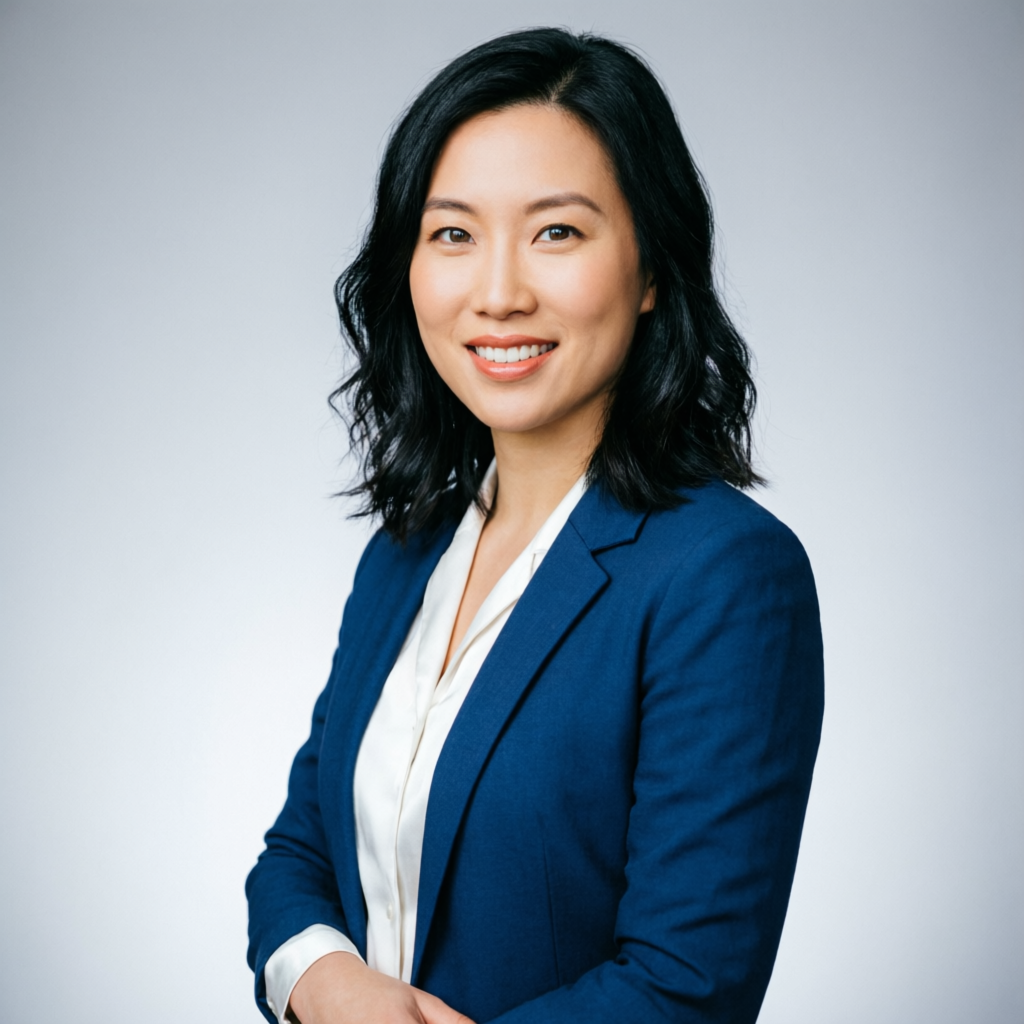
A Seattle Software Engineer Flew to Shanghai for 8 Years of Insomnia — Here's What Actually Happened
By the time Daniel K. landed at Shanghai Pudong International Airport on a rainy Tuesday morning in October 2024, he had not slept more than four consecutive hours in eight years. He was 43, a senior software engineer at a Seattle tech company, married with two kids, and by every external metric his life was working. Internally, he was falling apart in slow motion.
He had tried the entire American insomnia playbook. Ambien, Lunesta, trazodone, Rozerem, Belsomra, mirtazapine off-label. CBT-I with two different sleep psychologists over eighteen months. A $4,800 in-lab sleep study that ruled out apnea. Melatonin, magnesium glycinate, L-theanine, ashwagandha, valerian, weighted blankets, cooling mattress pads, blue-light glasses, no screens after 8 PM, no caffeine after noon, no alcohol at all. He owned three different Oura rings across four years. He knew his HRV baseline. He knew his sleep debt down to the minute.
Nothing worked. His sleep score was somewhere between "elderly cardiac patient" and "wartime shift worker." He had gained 22 pounds. His marriage was strained. His last performance review at work was, in his own words, "the first one where I could see myself being managed out."
Then his sister-in-law, who had traveled through OrientHealthLink for chronic migraine in 2023, sent him an email with a subject line that read: "Read this. I know you're going to roll your eyes. Read it anyway."
What follows is Daniel's day-by-day account of the 21 days he spent at Shanghai Huashan Hospital's integrated TCM and neurology unit. His sleep diary, his itemized $5,940 bill, and what his American sleep doctor said when he got home.
Why Daniel Almost Didn't Go
Daniel is a skeptic by profession. He builds distributed systems for a living. His view of traditional Chinese medicine going into this trip was, in his own words: "polite dismissal — I assumed it was placebo with better marketing."
What changed his mind was not a story or a testimonial. It was a phone call with the Huashan physician who would eventually treat him — Dr. Chen, a Western-trained neurologist who also holds a doctorate in TCM. On that call, which lasted 55 minutes, Dr. Chen did three things Daniel's US doctors had never done.
First, she asked him to describe his sleep in detail — not with numbers, but with narrative. What time did he get into bed? What did he think about? What woke him? What did his body feel like when he woke? Daniel talked for twenty minutes. She did not interrupt.
Second, she asked about things his American doctors had never asked. His digestion. His temperature preferences. His energy patterns through the day. Whether his hands got cold at night. Whether he sweated more at any particular time. Whether his tongue felt different when he woke up.
Third, she said something no US doctor had said to him: "I think this is treatable. I think we can substantially improve this in three weeks. I do not think you are broken."
Daniel booked the trip the next morning.
Days 1-3: Diagnosis
Daniel arrived in Shanghai on a Tuesday. OrientHealthLink had arranged airport pickup, a serviced apartment 12 minutes from Huashan, and an initial rest day. He crashed for six hours — the longest single stretch he had slept in three years — and later said he suspected pure exhaustion from the 15-hour flight.
Day 2 was diagnostic intake. Blood work, ECG, and a second sleep study — this time not to rule out apnea but to characterize what his brain was actually doing at night. The Huashan protocol included a full polysomnogram plus something Daniel had never done in the US: a daytime EEG under three different cognitive states.
Day 3 was Dr. Chen's full evaluation. She spent 90 minutes with him. She read his tongue, took his pulse in six positions on both wrists, palpated points along his abdomen. She reviewed the sleep study, his medication history, his diet log. Then she gave him a diagnosis that his US doctors had never given him — not because they were wrong, but because it wasn't the framework they used.
In Western terms, Dr. Chen said Daniel had chronic hyperarousal insomnia with a strong autonomic component — his sympathetic nervous system was stuck in a low-grade "on" state 24 hours a day, and his sleep architecture had adapted around it. In TCM terms, she described it as a pattern involving liver qi stagnation, heart yin deficiency, and spleen qi weakness. Daniel wrote both diagnoses down. He did not understand the second one. Dr. Chen said he did not need to — she and her team would.
The 21-day plan she laid out included: daily acupuncture, a custom herbal formula adjusted weekly, tuina massage three times a week, a specific breath training protocol, dietary changes, controlled physical exercise, and — importantly — a supervised taper of the two Western medications he was still on. Not eliminated. Tapered. She was not anti-Western medicine, and she said so explicitly.
Days 4-7: The Skeptic Cracks
Daniel is candid that the first acupuncture session made him uncomfortable. Not physically — he says the needles were painless — but philosophically. He kept looking for a "trick." He watched the needles closely. He tracked how he felt hour by hour. He wrote everything down in his sleep diary.
Night 4: 5 hours 40 minutes, one wake-up.
Night 5: 6 hours 15 minutes, no wake-ups he remembered.
Night 6: 7 hours 5 minutes. Woke naturally. Did not touch phone before getting out of bed.
Night 7: 7 hours 20 minutes.
He wrote in his diary on day 8: "This is either the biggest placebo I have ever experienced, or something is actually changing. I do not know how to tell the difference from inside the experience. That is unsettling."
Dr. Chen's response, delivered dryly during the day 8 check-in: "Placebo does not last 21 days in someone with 8-year chronic insomnia. If it works after you go home, it wasn't placebo."
Days 8-14: The Herbs
The herbal formula Daniel took twice a day was a decoction — meaning it was brewed fresh from raw herbs by the hospital pharmacy and delivered in vacuum-sealed pouches. He drank it warm, morning and evening. It tasted, in his words, "like bitter old wood soaked in tea." He hated it. He drank it anyway.
The formula was adjusted twice during the 21 days based on how he responded — this is standard TCM practice and one of the biggest differences from Western pharmacology. His week 1 formula had ingredients aimed at what Dr. Chen described as "calming shen" — mental restlessness. His week 2 formula shifted more toward nourishing yin — supporting sustained sleep. His week 3 formula was aimed at consolidating the improvements so they would persist after he stopped the herbs.
By day 12, Daniel was sleeping 7 hours consistently. He was still doing acupuncture daily, tuina three times a week, and a 20-minute breath training practice morning and evening. He had also — and he emphasizes this to anyone who asks — completely stopped scrolling on his phone in bed. Dr. Chen had been immovable on this. "The best herbs in China cannot compete with a phone at 11 PM," she told him.
His mood was also shifting. Daniel says the change he did not expect was in his daytime energy. He had assumed for years that his fatigue was purely a sleep deprivation issue. But even when he slept 7 hours, his energy through the day was different at Huashan than it had been in Seattle. Less foggy. Less reliant on coffee. Something he described as "quieter."
If you are wondering how a treatment plan like Daniel's would be structured for your specific case, you can get a free assessment from our medical team.
Days 15-18: Life Outside the Hospital
By week 3, Daniel was medically stable enough to spend more of his day outside the hospital. He walked along the Suzhou Creek in the mornings. He ate lunch at a small dumpling place he had grown obsessed with. He did a walking tour of the French Concession one afternoon. On day 17 he called his wife on FaceTime and she told him — a full five days before he flew home — "You look different. I don't know how to explain it. You just look different."
Daniel says that comment stayed with him. He had been living in his own body for eight years and had stopped being able to see his own decline. Someone else could see the reversal happening in real time.
He also visited two other patients — an older woman from Texas who was in the same unit for atrial fibrillation and integrated TCM, and a father-daughter pair from California where the father was being treated for early Parkinson's alongside standard neurology care. Both families had booked through the same coordinator. All three patients ate hotpot together one night in a small restaurant near the hospital. Daniel called it "the most connected I have felt with strangers in maybe a decade."
Days 19-21: The Handoff
The final three days at Huashan were about handoff. Dr. Chen and her team prepared a discharge protocol that included a maintenance herbal formula for eight weeks, a self-acupressure routine Daniel could do at home, a written sleep hygiene protocol, a supervised medication schedule (he had already tapered off both Western sleep meds by day 15 — under her supervision — and was on nothing pharmacological when he left), and a plan for two follow-up video visits at week 4 and week 12 after his return.
He also got a formal medical report in English, addressed to his primary care physician in Seattle, that documented the diagnosis, the interventions, the outcomes, and the recommended follow-up. This is standard practice at tier-3 international hospitals in China but Daniel says he was still surprised by how thorough it was. His US PCP later described it as "one of the most detailed treatment summaries I have ever received from any hospital, domestic or international."
The Bill
Here is exactly what Daniel paid, itemized:
| Item | Cost (USD) |
|---|---|
| Round-trip flight SEA-PVG (economy plus) | $1,340 |
| Serviced apartment 21 nights near hospital | $1,470 |
| Airport transfers and in-city transport | $180 |
| Huashan initial consultation and diagnostics | $720 |
| Sleep study and diagnostic EEG | $540 |
| 21 days of daily acupuncture | $630 |
| Tuina massage sessions (9 total) | $315 |
| Custom herbal formulas (3 weekly formulations) | $385 |
| Follow-up consultations and physician time | $260 |
| OrientHealthLink coordination fee | $350 |
| Food and incidentals | $750 |
| Total | $6,940 |
By comparison, Daniel's US insomnia care over the previous eight years had cost him — after insurance — approximately $22,000 out of pocket. That figure does not include the estimated lost income from his declining performance at work, which he thinks was substantially higher.
You can estimate your own case here to see what a similar program would run for your specific situation.
What Happened After Daniel Got Home
Daniel flew back to Seattle on day 22. He was nervous — everyone in that hospital unit had warned him that the "reentry" was the hardest part. Jet lag would disrupt sleep. Work stress would return. His American environment would push him back toward his old patterns.
They were right and they were wrong. Jet lag disrupted his sleep for six days — his diary shows 4.5 to 6.5 hour nights during that stretch. But by day 8 back in Seattle, he was consistently at 7+ hours. By week 4 he was averaging 7 hours 40 minutes. By his 12-week Huashan follow-up video call, he had gained back 4 pounds of muscle, lost the 22 pounds of stress weight, and had not taken a single Western sleep medication in over four months.
His US sleep specialist — the same one who had run his $4,800 sleep study — asked him for the Huashan discharge report and read it carefully. Her response, in Daniel's paraphrase: "I don't understand exactly what they did, but the outcome is the outcome. Whatever you're doing, keep doing it."
Daniel now maintains a modified version of his Huashan protocol at home. He continues the self-acupressure routine most mornings. He drinks a much simpler maintenance tea Dr. Chen designed for long-term use. He does the breath training. He does not scroll in bed. He sees a Seattle-based licensed acupuncturist once a month for maintenance.
What Daniel Would Tell Another American in His Position
We asked Daniel — as we ask every patient — what he would say to another American considering this trip. His answer:
"If your American doctors have told you 'this is chronic, you need to manage it,' and you have already done the responsible thing and tried their protocol for years — go. Just go. The medicine is real. The doctors are real. The results are real. I spent eight years being managed. I spent 21 days being treated. There is a difference and you will feel it."
"The thing I got wrong going in was thinking I had to choose between Western and Chinese medicine. Nobody at Huashan asked me to choose. They used both. They tapered me off two Western drugs while I was there — with supervision — because those drugs weren't fixing anything, they were just suppressing signals. What actually fixed the problem was different."
Daniel does not do social media. He does not want to be a case study. But he did want his story told, and he wanted this specific line in the article: "I have my life back. It cost me $6,940 and 22 days. That is not a hard trade."
The Bigger Picture
Daniel's story is one of a growing category we are seeing more often in 2026 — mid-career American professionals with chronic conditions that Western medicine has framed as "manageable but not curable," who are increasingly willing to travel for a different framework. Insomnia, migraine, chronic pain, autoimmune conditions, digestive disorders. These are not surgical fixes. They are pattern-of-life fixes, and the Chinese integrative model — Western neurology and internal medicine plus classical TCM under one roof — is uniquely equipped to handle them.
If your American treatment has plateaued and you want to understand whether the integrative approach could help your specific situation, our clinical team can review your records and give you an honest assessment — including whether we think you would benefit from the trip, and whether we think you should stay home and try something else first.
For more patient stories in this category, see A Denver ICU Nurse's Chronic Migraine Story, or if you are earlier in the process, start with the 7-step booking process.
Want to know how much YOUR case would cost?
Get a personalized estimate based on your specific condition and treatment needs.
Or reach us directly on WhatsApp: +86 152-1078-0345
Internal links: → How we choose your hospital and doctor · → Top JCI-accredited hospitals in China · → Your journey: every step from assessment to follow-up