1(213)276-6416|国际医疗协调服务 · 北京
English登录免费注册 →
OrientHealthLink
OrientHealth国际医疗服务
首页健康体检手术与治疗慢性病调理疾病治疗合作医院套餐价格博客联系我们
免费开始 →费用计算器 · 患者故事 · 无需绑卡

获取免费医疗旅游指南

下载完整指南 + 每周获取专家建议

OrientHealthLink

总部位于北京 · 国际医疗协调服务

"透明定价——无隐藏费用。详见定价页面。"

快速链接

服务流程合作医院慢性病调理安全保障套餐价格会员博客联系我们合作推广成为地接

联系方式

info@orienthealthlink.com1(213)276-6416WhatsApp 咨询

北京市昌平区北七家未来科学城(北京协调团队)

医疗免责声明:OrientHealthLink 是医疗旅行协调服务提供商,不是医疗机构。本网站内容仅供一般信息参考,不构成医疗建议、诊断或治疗方案。我们不提供任何形式的医疗诊断、治疗建议或健康评估服务。所有医疗决策应由您与具有执业资格的医师共同做出。本网站提及的中医疗法效果因人而异,相关描述基于传统中医理论,不代表对特定疗效的保证。跨境医疗涉及复杂的法律和健康风险,建议您在做出决定前咨询专业法律和医疗顾问。

© 2024–2026 OrientHealthLink. All rights reserved.

服务条款隐私政策
返回博客
Decision2026-07-1013 分钟阅读

2026年中国最适合外国患者的医院:按病种老实排名

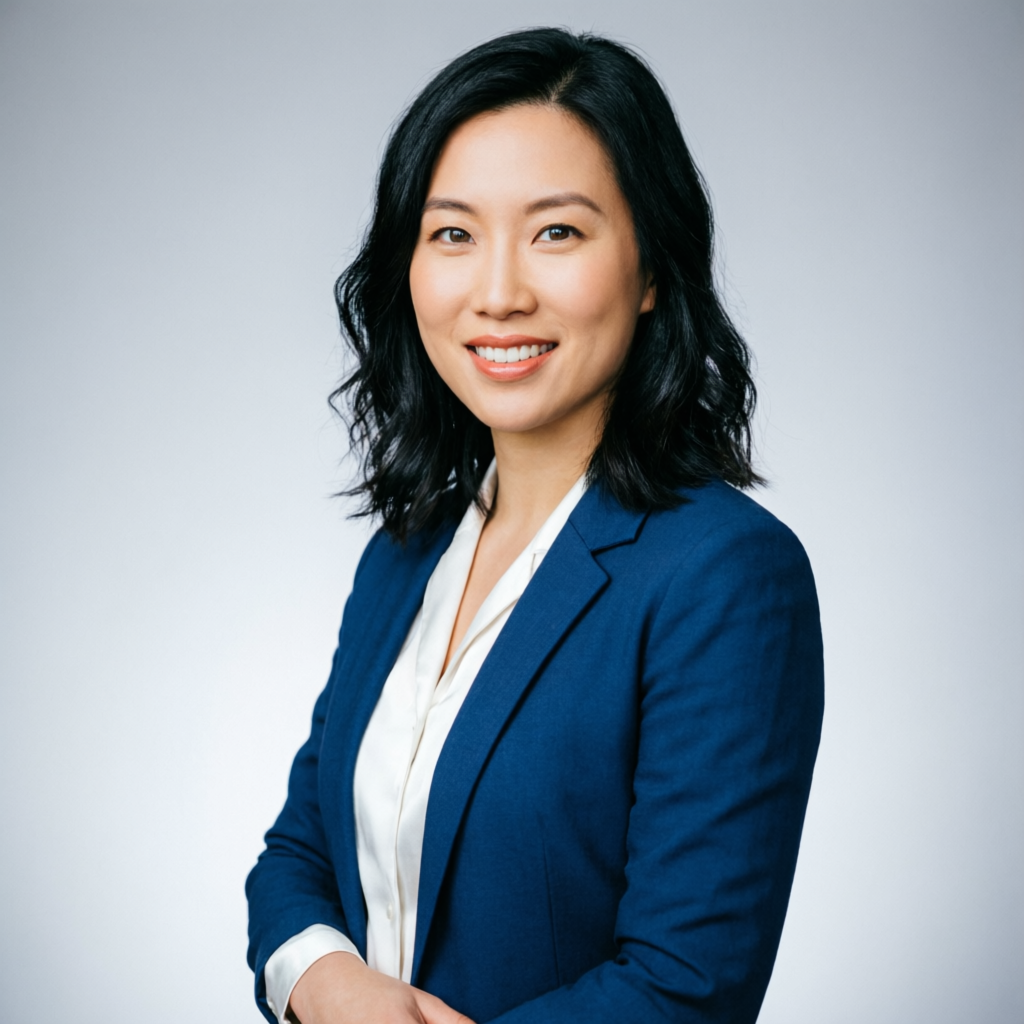
林思瑶

林思瑶

高级医疗旅行协调员

8年在北京和上海协调国际患者医疗服务经验。

Best Hospitals in China for Foreign Patients in 2026: An Honest, Use-Case-by-Use-Case Ranking

Google "best hospital for foreigners in China" and you get a wall of PR pieces that all say the same seven hospital names. Useful up to a point, useless past it. The real question is not "which is the best hospital in China" — it is "which hospital is best for MY procedure, MY budget, and MY tolerance for logistics." Those three variables move the answer around a lot.

This piece is our internal 2026 shortlist, written for American patients who are actually deciding — not for search engines. We coordinate cases into most of these hospitals every month, so the notes below come from real intake volume and real discharge outcomes, not brochures.

If you already know your procedure and just want a personalized shortlist, you can get a free assessment here and we will send you two or three specific department-and-surgeon pairings within 24 hours — that is faster than reading this whole guide, honestly. But if you want to understand the landscape first, keep reading.

How we actually rank a hospital for a foreign patient

Before the list, the criteria — because "best" without criteria is just marketing.

  • Procedure-specific case volume. A hospital ranked #1 nationally in cardiology can still be mid-tier for spine. We ask about the surgeon and the department's volume for your specific procedure, in the last 12 months.
  • International patient infrastructure. English-speaking coordinators, dedicated international wards, insurance-friendly itemized billing, translated discharge summaries. This is not luxury — it is what determines whether your US doctor can follow up cleanly.
  • JCI or equivalent accreditation. Not every excellent Chinese hospital has JCI. But if you are new to medical travel and want an easy sanity check, JCI accreditation is a reasonable filter.
  • Outcomes transparency. Can they show you their infection rate, their revision rate, their mortality data for the specific procedure? The good ones can.
  • Geography and logistics. Beijing, Shanghai, and Chengdu are the easiest three cities for American arrivals. Guangzhou and Hangzhou are close behind. Anything else adds a domestic transfer.

With those criteria in mind, here is our working 2026 shortlist, grouped by what you are actually flying in for.

Best for complex surgery in an English-language environment

Peking Union Medical College Hospital (PUMCH) — Beijing

The default answer for a reason. PUMCH is China's #1 or #2 ranked hospital every year across most Chinese Medical Association tables. It is the referral hospital for complex, rare, and multi-system cases that regional hospitals cannot handle. Every US embassy staffer in Beijing knows the international patient center by name.

Where PUMCH excels: complex general surgery, endocrinology (world-class), rare disease diagnostics, gynecology and gynecologic oncology, and hematology. Where it is merely good, not exceptional: some outpatient orthopedics, some cosmetic procedures. Wait times for elite department heads can be long — often 3–6 weeks even for international patients.

Rough all-in cost signal for a mid-complexity surgery (e.g., laparoscopic hysterectomy, thyroidectomy, gallbladder): $6,500–$12,000 including 7–10 nights inpatient. For context, our patient in the Houston hysterectomy story paid a similar range at a Shanghai peer hospital.

Ruijin Hospital — Shanghai

Ruijin is where you go when your case is complex and you want the fastest turnaround among top-3 hospitals. Their international patient wing (called the Guangci International Medical Center) runs on a private-hospital feel with tertiary-hospital medicine behind it — a rare combination in China.

Strengths: cardiovascular surgery (their TAVR volume is among the highest globally), hematology, and endocrine surgery. Ruijin is where our Ohio patient in the heart valve replacement story got his TAVR done. English-language documentation is the strongest we have seen at any Chinese public hospital.

Best for cardiovascular procedures

Fuwai Hospital — Beijing

If cardiac is why you are coming, Fuwai should be at the top of your list. It is the National Center for Cardiovascular Diseases, meaning it is the referral hospital for cardiac cases in China. Volume is staggering — they do more coronary bypasses in a month than many US hospital systems do in a year.

What that volume buys you: an experience curve that Western academic centers respect. Complex valve repairs, congenital adult cardiac cases, adult ECMO — Fuwai has done thousands of each. The international patient department is smaller than PUMCH's but efficient.

What Fuwai is not: a good fit for anything outside cardiovascular. If you also need neurology or endocrinology alongside your heart workup, pair Fuwai with PUMCH (they are 12 minutes apart in Beijing) or route through Ruijin instead.

Zhongshan Hospital (Fudan) — Shanghai

The Shanghai cardiovascular alternative to Fuwai, and the top-ranked Chinese hospital for cardiology in Fudan's own national ranking. Slightly smaller international patient volume than Ruijin, but excellent for TAVR, mitral repair, and structural heart cases.

Best for orthopedics and joint replacement

Beijing Jishuitan Hospital

Jishuitan is the National Orthopedic Center. If you are flying in for a knee or hip replacement, a spine fusion, or complex trauma reconstruction, this is the volume leader. They do roughly 12,000 joint replacements a year — a number that puts them in the same tier as the highest-volume US orthopedic centers (Mayo, HSS, Cleveland Clinic) and, in some categories, ahead.

Where they shine for foreigners: same-day imaging, integrated rehab in the same building, and surgeons who publish in Western journals. Where they are weaker than PUMCH: their international patient coordination is less polished. You want a coordinator on your side here.

All-in signal for a unilateral knee replacement with 5 nights inpatient and 2 weeks outpatient rehab: $9,500–$14,000. For a full comparison of what that money buys versus a US quote, our piece on knee and hip replacement costs in China breaks it out.

Shanghai Sixth People's Hospital

The Shanghai counterpart for orthopedic trauma and hand/microsurgery. Their reattachment work is world-famous inside the field. If your case is orthopedic plus soft tissue reconstruction, Sixth People's is often the right answer over Jishuitan.

Best for oncology

Cancer Hospital of the Chinese Academy of Medical Sciences (CHCAMS) — Beijing

The national cancer center. Full oncology stack: surgical, medical, radiation. Proton therapy access through partner facilities. If you have a solid tumor and need multi-disciplinary care with a foreign passport, CHCAMS is the safest choice — their international patient office has been doing this since 2009.

Fudan University Shanghai Cancer Center (FUSCC)

The Shanghai peer. Some subspecialties (breast, GI) are considered by many Chinese oncologists to be marginally stronger than CHCAMS. FUSCC is the go-to if you also want proximity to Ruijin for a cardiac clearance workup before chemo — a common combined workup for older patients.

Best for TCM + Western integrated care (chronic disease, migraine, autoimmune, fertility)

Guang'anmen Hospital — Beijing

Affiliated with the China Academy of Chinese Medical Sciences. If your reason for coming to China is a chronic condition — migraine, autoimmune flare, unexplained infertility, chronic fatigue, IBS — this is the hospital that runs the most rigorous integrated protocols. Every patient sees both a Western-trained physician and a TCM physician, and the charts are shared.

This is the model our patient used in Amanda's chronic migraine case, and it is what makes chronic-disease travel to China genuinely different from a spa week. Costs are dramatically lower than surgical cases — full 6-week protocols run $3,500–$6,500 all-in.

Longhua Hospital — Shanghai

The Shanghai peer, affiliated with Shanghai University of TCM. Particularly strong for oncology-supportive TCM (fatigue and immune support during chemo), dermatology (eczema, psoriasis), and pediatric TCM.

Best for a comprehensive health checkup (VIP screening)

Peking Union Medical College Hospital International Medical Center

Ruijin Guangci International Medical Center

Beijing United Family Hospital (a private JCI-accredited hospital)

All three run 1-day and 2-day executive checkup packages that include MRI, low-dose CT chest, full bloodwork, cardiac stress echo, ultrasound, and gastroenterology consults for $850–$1,900. That is a fraction of what a comparable US executive physical costs (typically $3,500–$6,500 in the US, and $8,000+ at concierge clinics).

If you are shopping this specific use case, you can estimate your own checkup cost here in about ninety seconds. It is the single easiest "first medical trip" to China — no surgery, no long stay, and you get five to seven pages of translated findings you can hand to your PCP.

Best if you want a private-hospital experience

Beijing United Family Hospital

Shanghai United Family Hospital

Puhua International Hospital — Beijing

These are the private, JCI-accredited, English-first hospitals. Costs are higher than public tertiary hospitals — usually 40–70% more — but you get a private room, a coordinator embedded in the ward, and a workflow that will feel familiar to anyone used to US private hospitals.

Trade-off: for the most complex cases (rare cancers, complex cardiac, transplant), you will still get better outcomes at the public tertiary centers (PUMCH, Fuwai, Ruijin) because that is where the surgeons and case volume live. A common hybrid: surgery at a public tertiary center, recovery at United Family. That works and we set it up regularly.

The comparison table

HospitalCityBest forEnglish infrastructureTypical cost tier
PUMCHBeijingComplex general, endocrine, rare diseaseVery strong$$
RuijinShanghaiCardiovascular, hematologyStrongest$$
FuwaiBeijingCardiac (volume leader)Strong$$
Zhongshan (Fudan)ShanghaiStructural heartStrong$$
JishuitanBeijingOrtho joint replacementModerate$$
Shanghai Sixth People'sShanghaiOrtho trauma + microsurgeryModerate$$
CHCAMSBeijingOncology (multi-disciplinary)Strong$$$
FUSCCShanghaiOncology (breast, GI)Strong$$$
Guang'anmenBeijingTCM + Western chronic diseaseModerate$
LonghuaShanghaiOncology-supportive TCMModerate$
Beijing United FamilyBeijingPrivate hospital experience, checkupsStrongest$$$
Shanghai United FamilyShanghaiPrivate hospital experience, checkupsStrongest$$$

Cost tiers are relative to Chinese pricing, not US pricing. Even the "$$$" tier is well under half of the US-insurance-billed equivalent for the same procedure.

What the PR articles get wrong

Three things routinely repeated in "best hospitals in China" listicles that are wrong or misleading:

  • "Just pick the highest-ranked hospital." Rankings are department-averaged. Your procedure lives in one department, and that department's rank matters far more than the hospital's overall rank. Our piece on what hospital rankings don't tell you covers this in depth.
  • "JCI accreditation = best quality." JCI is a floor, not a ceiling. Many of China's best surgeons work at hospitals without JCI. It's a useful signal for infrastructure and safety, but it does not correlate cleanly with surgical outcomes.
  • "You need to speak Chinese to be treated at a public hospital." You do not. The top international patient departments at PUMCH, Ruijin, Zhongshan, and Fuwai run in English end-to-end for the workup and discharge. Where you may need translation is if you want to talk to the ward nurses at 2am. That is why a coordinator is worth having.

How to actually pick, in three steps

  1. Nail down your exact procedure name (or if chronic, your working diagnosis). "Heart surgery" is not enough. "Mitral valve repair, minimally invasive" is enough.
  2. Match procedure to hospital, not hospital to procedure. Ask any coordinator (including us): "How many of X did your recommended surgeon do last year?" A number under 30 for a complex procedure is a yellow flag. Under 10 is a red flag.
  3. Get an itemized quote in writing before you pay a deposit. We wrote a full guide on how a safe payment flow looks: how to pay a Chinese hospital safely.

If step 2 sounds like a lot, that is exactly the piece OrientHealthLink handles for our patients — we hold the procedure-to-surgeon match, we get the case volume numbers, we negotiate the itemized quote, and we route you into the right international patient office. We do not markup the hospital cost; our fee sits on top and is disclosed before you commit.

The one-line answer

If you forced us to pick a single hospital for a first-time American patient with a moderately complex case and no strong geographic preference, the honest answer for 2026 is Ruijin Hospital in Shanghai — because it combines top-3 clinical outcomes with the smoothest English-language international infrastructure in the country. PUMCH is a coin-flip alternative if you are cardiac-heavy or endocrine-heavy.

But that single-line answer is worth less than a fifteen-minute conversation about your actual case. Which is why we do those conversations for free.

Want to know how much YOUR case would cost?

Tell us your procedure and city preference — we'll send you two or three specific hospital-and-surgeon matches with itemized quotes within 24 hours. No obligation, no upsell.

Get My Free Estimate → Try the Cost Calculator

Or WhatsApp us directly: +86 138 0000 0000 — usually reply within a few hours.

best hospital for foreigners chinatop hospitals china international patients 2026medical tourism china reviews 2026pumch vs ruijinbest hospital china surgery americans
分享:

关注医疗旅行最新资讯

获取免费指南 + 每周医疗旅游专家洞察,直达您的邮箱。

相关服务

准备好迈出下一步了吗?

从初次咨询到术后随访,我们为您的中国医疗之旅处理每一个细节。

了解我们的服务

准备好探索中国的医疗服务了吗?

联系我们获取免费咨询,我们的专业团队将为您量身定制医疗旅行方案。

免费咨询
返回博客